This article first appeared in “Mandolin Quarterly” in 2000, Vol. 5 Nr. 1.
The bandolim, or Brazilian mandolin, is one of choro’s most frequent melody instruments today, and was probably involved in choro from its earliest days. The bandolim was imported from Portugal to Brazil in the 19th century and was found in early popular music ensembles in Brazil before the turn of the century. The bandolim took a more central role in choro in the 1920’s, and further increased its prominence through the playing of Jacob do Bandolim in the 1940’s.
Jacob transformed choro style, and changed the role of the bandolim from supporting to center stage. His virtuoso technique and discipline as a conjunto leader raised the level of ensemble playing in a period when choro was moving from amateur gatherings in informal venues to professional concerts, radio and TV broadcasts, and studio recordings. But Jacob wasn’t the first or the last bandolimist in choro. Although it’s difficult to find out much about the lives and contributions of early players, I decided, as a mandolinist, to try to assemble a chronology of early bandolim players, and continue on to Jacob’s students and contemporary players performing and recording today. Here, then, is an overview of nearly a century of bandolim in choro.
The best source I’ve found for names of players and instrumentations of early choro ensembles is the book Carinhoso Etc. (Historia e Inventario do Choro) written by Ary Vasconcelos in 1984. Unfortunately the “inventory,” an alphabetical listing of choro titles with dates and performers of all their recordings, stops at the letter “D,” and there is no evidence that volume two was ever published. But the history is an interesting round-up of important choro recording groups, and clearly shows that the bandolim was present in choro, at least since the recording era began. The earliest mention of bandolim in Vasconcelos’ listings is the “Groupo dos Sustenidos,” comprised of an undesignated number of bandolims and violões (guitars), who recorded Ernesto Nazareth’s “Bambino,” and “Destemidos,” and Chiquinha Gonzaga’s “Corta Jaca” for Odeon Records in 1913. The earliest identified bandolimist is José Alves, who played bandolim in 1919 for Pixinguinha’s first “Os Oito Batutas” (The Eight Hotshots). Also in the band was Luis de Olivera who played bandola.
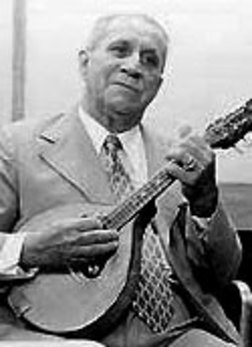 In Rio in the 1930’s, Vasconcelos lists the important choro soloists as Pixinguinha and Benedito Lacerda, flute; Luis Americano, clarinet; and Luperce Miranda (1904-1977), bandolim. Luperce Miranda is the first significant bandolim soloist I’ve found in any source, and his recording career predates Jacob’s by two decades. Luperce was born in Recife, in the northeast of Brazil. His father was a musician, and he was one of eleven musical children. Luperce was playing bandolim in a family band at the age of 8, and later he played in the “Trio Miranda” with his brothers Romualdo on violão and Nelson on cavaquinho. He began composing at age 15, and went to Rio with his group “Turunas da Mauricéia” in 1926, to record his compositions “Helena” and “Piniao.” The later would propel him to fame as the hit song of the Carnaval of 1928.
He returned to Recife in 1928 and formed the group “Voz do Sertão,” that started out as a quartet with bandolim, two violões and cavaquinho, and later included a second bandolim, Robson Florence, and a singer. A year later he was back in Rio, with the “Regional Luperce Miranda,” playing on the Rádio Clube do Brasil, and recording his compositions and other choro. In 1931 he formed the group “Alma do Norte,” that performed on Radio El Mundo with famous singers of the day, such as Noel Rosa and Carmen Miranda. Vasconcelos lists him recording as a soloist in the 1930’s backed by violões or a conjunto, and he also made some recordings with Luis Americano, the great choro clarinetist.
In the 1940’s Luperce formed the “Quarteto Brasil” with cavaquinho, violão, and percussion, and played with Pixinguinha’s “Orquestra Victor Brasileira.” Vasconcelos also cites Luperce recording with his own group in the 1950’s. Luperce Miranda was the most important bandolimist in the pre-Jacob years, and his style of playing differed greatly from the bandolim style Jacob was to develop. He used tremolo in much the same manner as Italian mandolinists of his day, and his was smoother and more subtly nuanced than that of other choro bandolimists. His compositions are ornamented and virtuosic with fast sixteenth-note scales and arpeggios runs, technically similar in many ways to the popular mandolin composition of Raphael Calace or Carlos Munier. His recorded tone is more classical than Jacob’s, and he switches easily between a refined classical sound and a bright flashy pop style depending on the nature of the composition. Luperce later opened an academy of music specializing in string instruments, passing his knowledge on to a new generation of chorões. He continued to record until the 1970’s, releasing his last LP “História de um Bandolim” in 1977.
In Sao Paulo in 1929, the Orchestra Colbaz began. A 7-piece group playing choro and samba, its director was the famous pianist/composer Gaó, and the group also included flute, bandolim, violin, violão, alto sax and accordion. Their bandolimist was José do Patrocinio Oliveira, known as Zé Carioca (Carioca indicating a resident of Rio de Janeiro). “Orchestra Colbaz” recorded frequently in the 1930’s, including the first recording of Zequinha de Abreu’s famous choro “Tico-Tico no Fubá” for Columbia Records. Vasconcelos also lists Amador Pinho, bandolim, as one of the important Sao Paulo choro musicians of the period. Pinho recorded as soloist in the 1930’s, accompanied by violões, and was the founding bandolimist of “Conjunto Atlântico” in 1950. João Martins also recorded on bandolim in 1930, in duos and trios accompanied by violão, and later played in Pixinguinha’s “Orquestra Diabos do Céu.”
 The bandolim would become a focal point of the choro revival of the 1940’s through the playing of Jacob Pick Bittencourt (1918-1969), known as Jacob do Bandolim. Jacob began his musical training on the violin, and switched to bandolim when he was 12. In 1933, at age 15, he gave his first radio performance on an amateur-hour program, playing a choro with the “Groupo do Sereno.” His performance received enthusiastic response, and he formed the group “Jacob e Sua Gente,” which included 3 violões, cavaquinho, pandeiro, and percussion, and went on to receive first prize in a radio competition in 1934. The group began playing for Radio Guanabara, substituting on occasion for Benedito Lacerda’s famous conjunto, accompanying the best singers of the day.
In 1939, Jacob met César Faria, a violão player, at Radio Ipanema. César, who was also 21, soon began accompanying Jacob, a job he would continue for the rest of Jacob’s career. César Faria would also become the father of Paulinho da Violão, currently a popular samba singer, composer, and cavaquinho player, who was instrumental in the 1970’s choro revival. In 1943, Jacob stopped working for the radio, and continued his semi-professional performing career while supporting himself with a variety of jobs, including drugstore clerk, insurance agent, and salesman of various commodities. At the insistence of his wife, Adylia, he returned to radio in 1945, and recorded his first ’78 in 1947, accompanied by “César e Seu Conjunto Continental,” that included violão, cavaquinho, and pandeiro. He chose to record his own choro composition, “Treme-Treme” and Bonfiglio de Olivera’s waltz, “Gloria.” He switched record labels from Continental to RCA in 1949, and continued to record, tunes such as “Cabuloso,” “Remeleixo,” and the waltz “Feia,” with his own regional.
Jacob was an extraordinarily good soloist with a precisely rehearsed group, and had great hopes that RCA would make him a household name in Brazil. His performing style in this period was evolving, adding more improvisation and showing a decided jazz influence. He improvised extensively on each return of the A section in the choro’s rondo (ABACA) form, modernizing choro performance in a way that he would later decide wasn’t a good idea after all. Jacob continued to record during the 50’s, and in 1959 did a series of recording sessions for Rádio MEC that captured some of the best playing of his career. Those tracks have recently been rereleased on a CD and testify to the incomparable ability of Jacob in his prime. In 1966 he formed his most famous group, “Época de Ouro,” and recorded the LP “Vibrações,” that many feel was the best recording of his career. His aspirations for fame were not fulfilled in his lifetime, but Jacob’s recordings and compositions have been an inspiration to choro performers who have followed him.
Jacob’s mature style combined classical and popular influences. His ornamentation and much of his technique came from the Portuguese guitarre tradition, and his perfectionist tendencies set him apart from the choro field. But he was strongly influenced by the performances of choro masters he came in contact with, primarily clarinetist Luis Americano, flutist Benedito Lacerda, and his childhood friend and Rio street musician from the Barrio da Saúde, bandolimist Cincinato dos Sousa (b. 1923). All three excelled as performers and composers, and Jacob followed their example, enriching choro repertoire as well as its performance traditions. He reintroduced long-forgotten choro back into the repertoire, and transcribed pieces originally written for other instruments for his bandolim-led group.
He had no patience for those who chose to simplify and popularize choro style; he upheld strict standards of authenticity and virtuosity. In addition to developing the music of choro, Jacob modified the shape of the bandolim itself to achieve the brilliant tone that set his recordings apart. He also experimented with solo instruments to substitute for the bandolim, including the violinha, a tenor violão, and the vibraplex, an electric instrument that used Leslie speakers, the amplification system for Hammond organs, to create a jazz-guitar-like sound. Jacob influenced many bandolimists who would succeed him, including Deo Rian and Joel Nascimento. Rian even stepped into Jacob’s shoes with “Época de Ouro,” for performances and recordings after Jacob’s death. Jacob encouraged young choro performers through a series of competitions in the late 1950’s, including the Sao Paulo bandolimist Isaias Bueno de Almeida who he presented in his “Noite de Cariocas” in 1956. Ever the traditionalist though, Jacob warned Isaias against his tendency to improvise freely in his choro performance. “Just play the music, as beautifully as the composer wrote it.”
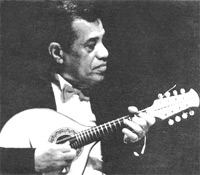 Choro performance opportunities dwindled during the reign of the bossa nova, but revived in the late 1960’s as new names began to appear on recordings. In Sao Paulo the leading bandolimist was Evandro, who played with his own group and later with the “Conjunto Atlântico.” Ninquinho was also recording on bandolim, with his regionail and in a duo with the virtuoso flautist Altamiro Carrilho. Joel Nascimento and Deo Rian, successors to Jacob’s technique, were both recording by the early 1970’s. In Bahia, in 1975, the group “Os Ingenuos” formed with Jose Luis de Jesus as the bandolim player. Also in 1975, the Museum of Image and Sound in Rio de Janeiro held a week-long tribute to Jacob do Bandolim that spurred new interest in choro.
The Clube do Choro, an organization founded to revive choro performance, began a series of national competitions for young choro groups and new choro compositions. In 1976, the competition was won by “Os Carioquinhas,” with Paulo Magalhães Alves on bandolim, and 14-year-old virtuoso Raphael Rabello on 7-string violão. The next year the group was beaten by “Amigos do Choro,” with Rossini Ferreira on bandolim, and Ferreira’s composition, “Recado” was named the best new choro. A year later, in 1977, the competition also included a group “A Cor do Som” playing what Vasconcelos described as a sort of choro-rock, with a player named Armandinho performing on both electric and acoustic bandolim. “A Cor do Som,” popular and controversial, went on to release an LP later that year. The winning group in 1977 was “Rio Antigo,” with Ricardo Calafate on bandolim, also winning the best new choro prize for his composition “Dialogando.”
Other bandolimists playing in Rio in the late 1970’s included Afonso Machado in “Galo Preto,” Marcos da Pina in “Vibrações,” Valter Moura in “Regional de Valter Moura,” José Duarte in “Carinhoso,” Valdinho do Bandolim in “Recordando,” Pedro Amorim in “Nó em Pingo d’Água,” José Xavier in “Copinho e Seu Conjunto,” Hélcio Avelino in “Choro de Varanda,” and Chinquinho Faria who played with Paulinho da Violão on his LP “Memórias Chorando.”
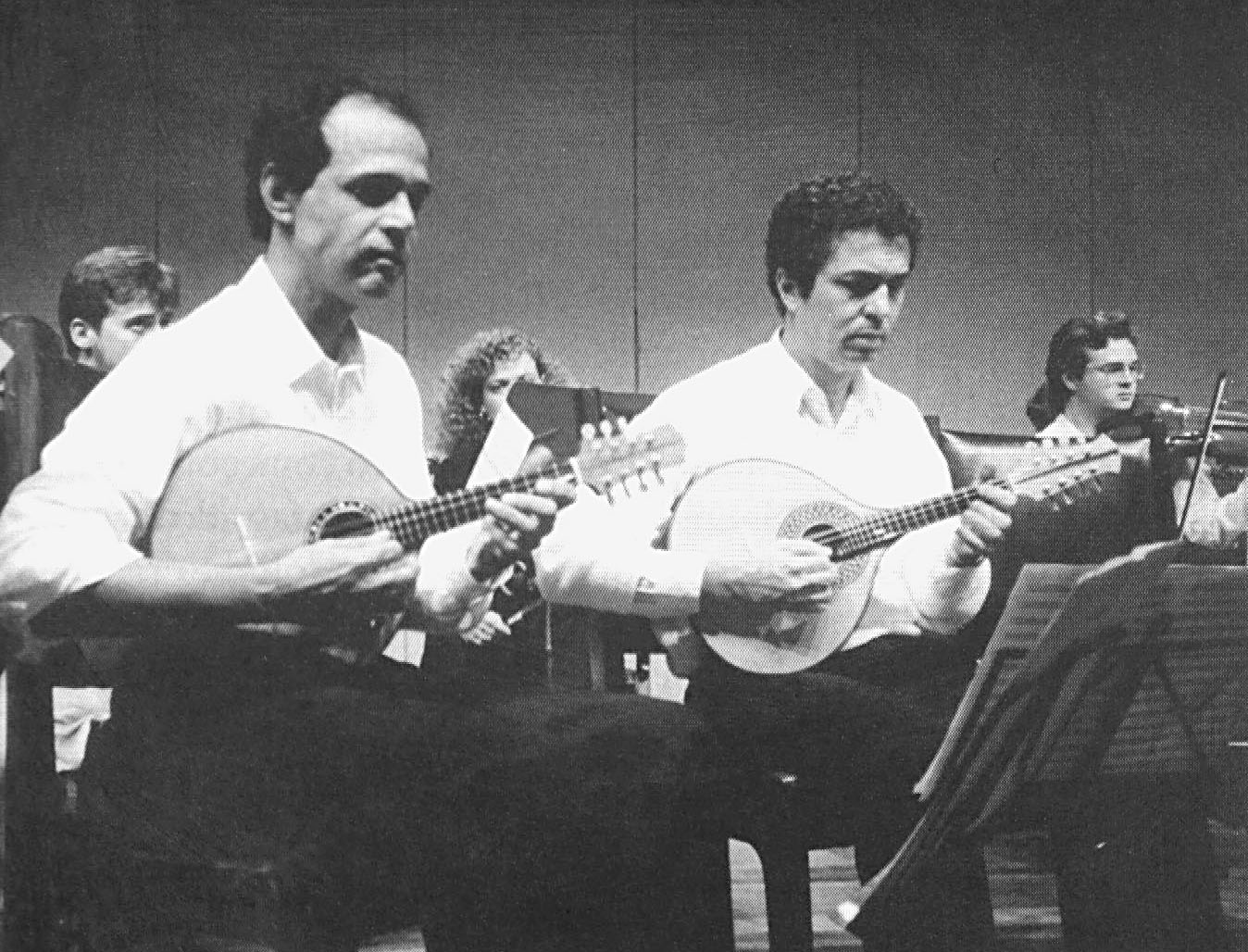 By the 1980’s nearly all of the of the important choro groups in Rio featured bandolim soloists, including Joel Nascimento in Radamés Gnattali’s “Camerata Carioca,” Deo Rian in “Noites Cariocas” with Raphael Rabello on violão, Ronaldo do Bandolim playing with “Epoca de Ouro,” Mauricio Almeida with “Naquele Tempo,” and Reco do Bandolim, in addition to most of the soloists from the prior decade. Around this time Pedro Amorim left “Nó em Pingo d’Água,” to pursue a solo career, and was replaced in that group by Rodrigo Lessa. In Sao Paulo, Evandro formed his “Regional,” Isaias Bueno de Almeida was performing with “Isaias & Chorões,” and encouraging Jane Coriolov, known as Jane do Bandolim, the first professional woman bandolimist in choro. Also in the late 1980’s, the Orquestra de Cordas Brasileiras, a choro plucked-string orchestra, began under the direction of choro historian and cavaquinho player Henrique Cazes.
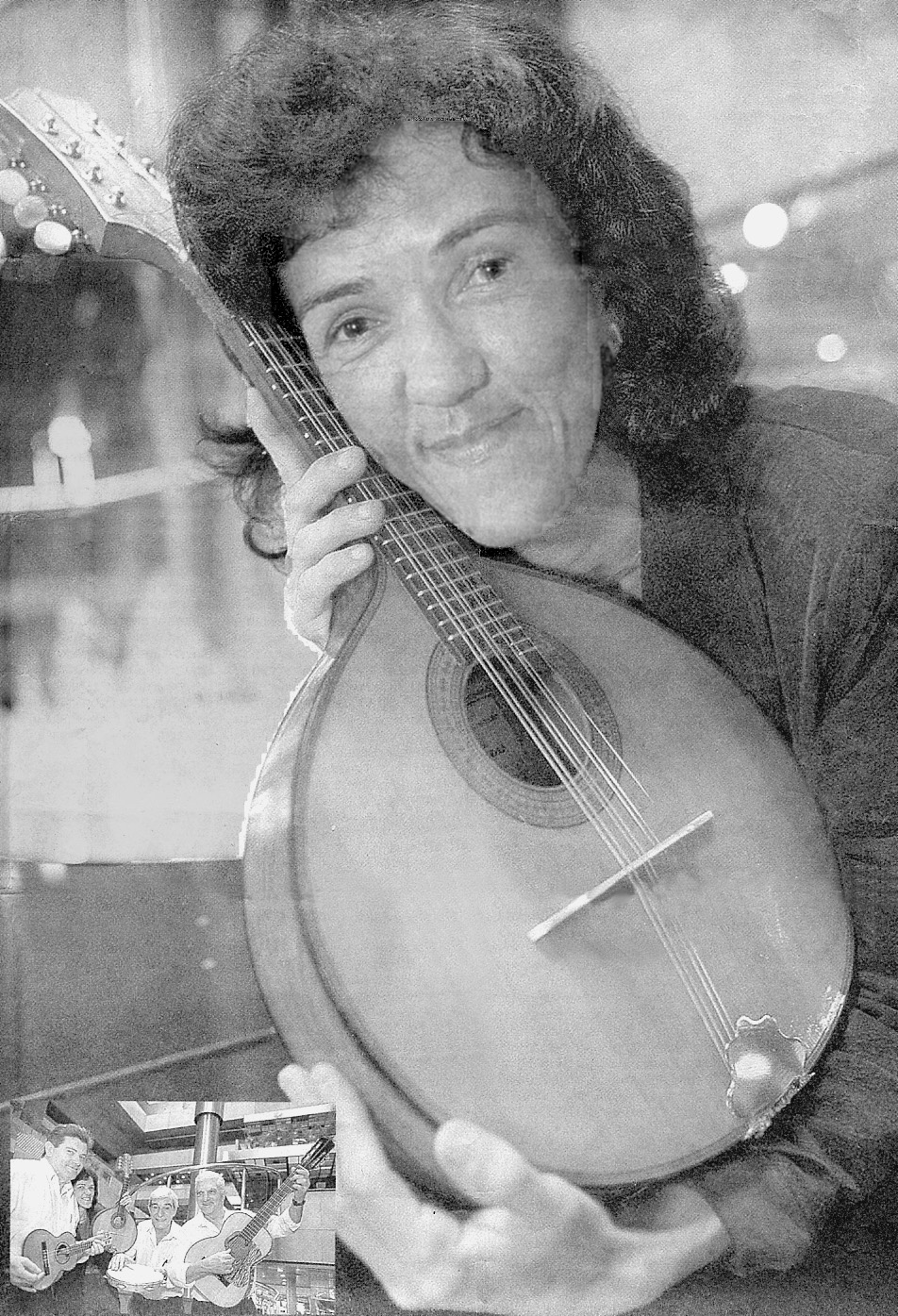 In the 1990’s, choro performance spread outside of Brazil, attracting the attention of mandolinists in the United States, Europe, and Japan. David Grisman and Barry Mitterhof were two of the first American bluegrass mandolinists to play choro, followed by Mike Marshall and others. In Japan, a 1985 tour by “Camerata Carioca,” gained a new audience for choro, and Japanese record companies began buying up and rereleasing old mastertapes of Jacob do Bandolim and others. Joel Nascimento recorded in Japan with his regional in 1987, and in the early 1990’s Evandro went to Japan and recorded 3 CDs with a Japanese group. In 1997, “Choro Club,” a Japanese trio with Oh Akioka, bandolim, accompanied by guitar and bass, released a CD of their own choro composition.
Choro also spread through South America, with players such as bandolimist Cristobal Soto in Venezuela writing new pieces based on an amalgam of choro and other national styles. And in Rio de Janeiro outstanding new bandolim players, such as Hamilton de Holanda, Jorge Cardoso, and Deo Rian’s son, Bruno, began a new generation of soloists, continuing the long tradition of bandolim in the birthplace of choro. The contemporary bandolim has retained its status as an important solo instrument in the choro conjunto, and its new players continue the traditions of virtuoso technique and expressive playing established by Luperce Miranda and Jacob do Bandolim in the first half of the last century. From the sounds of recent recordings I’ve heard, from Brazil and elsewhere, the bandolim is in good hands, and will continue to be important in choro into the 21st century.
Download a pdf of the original Mandolin Quarterly article: Mandolin in Choro